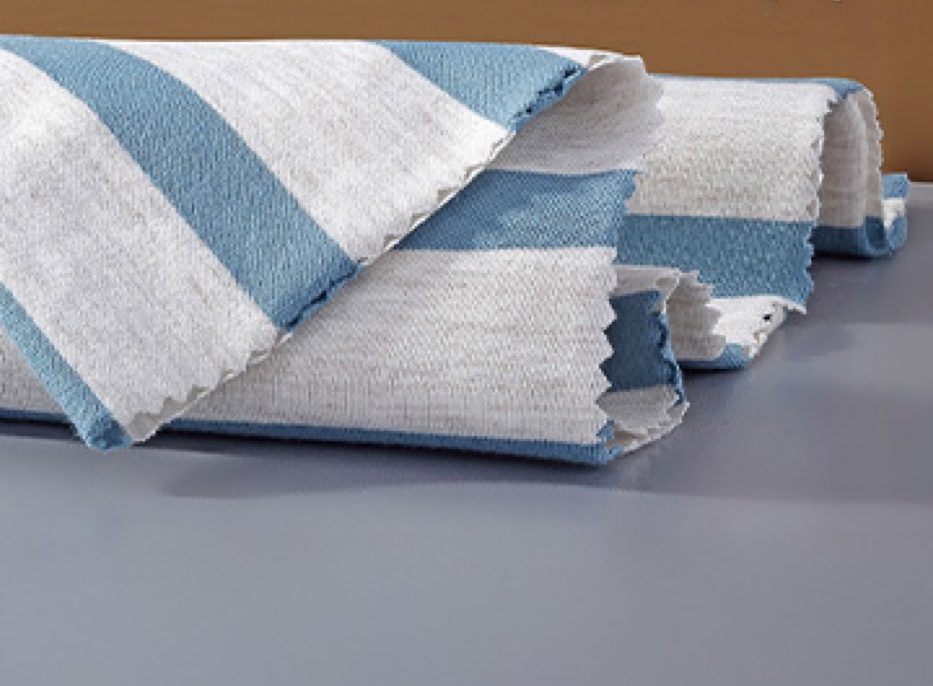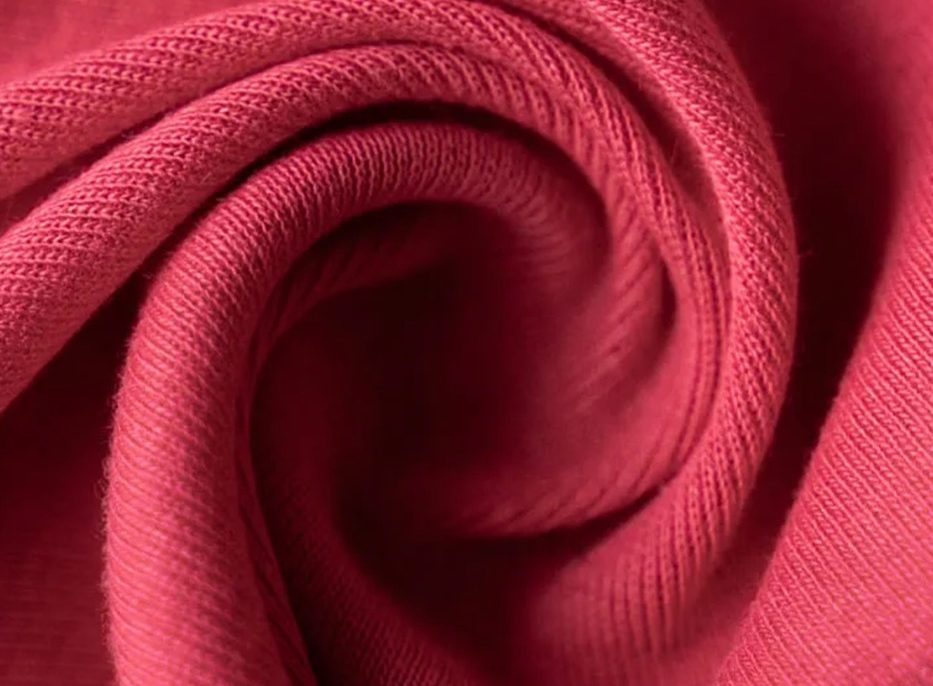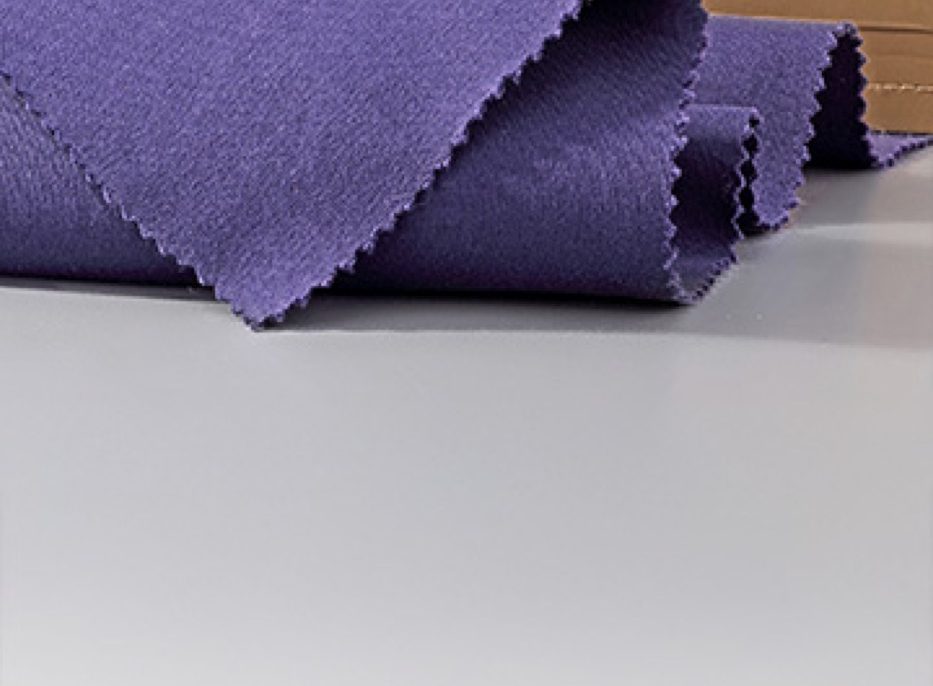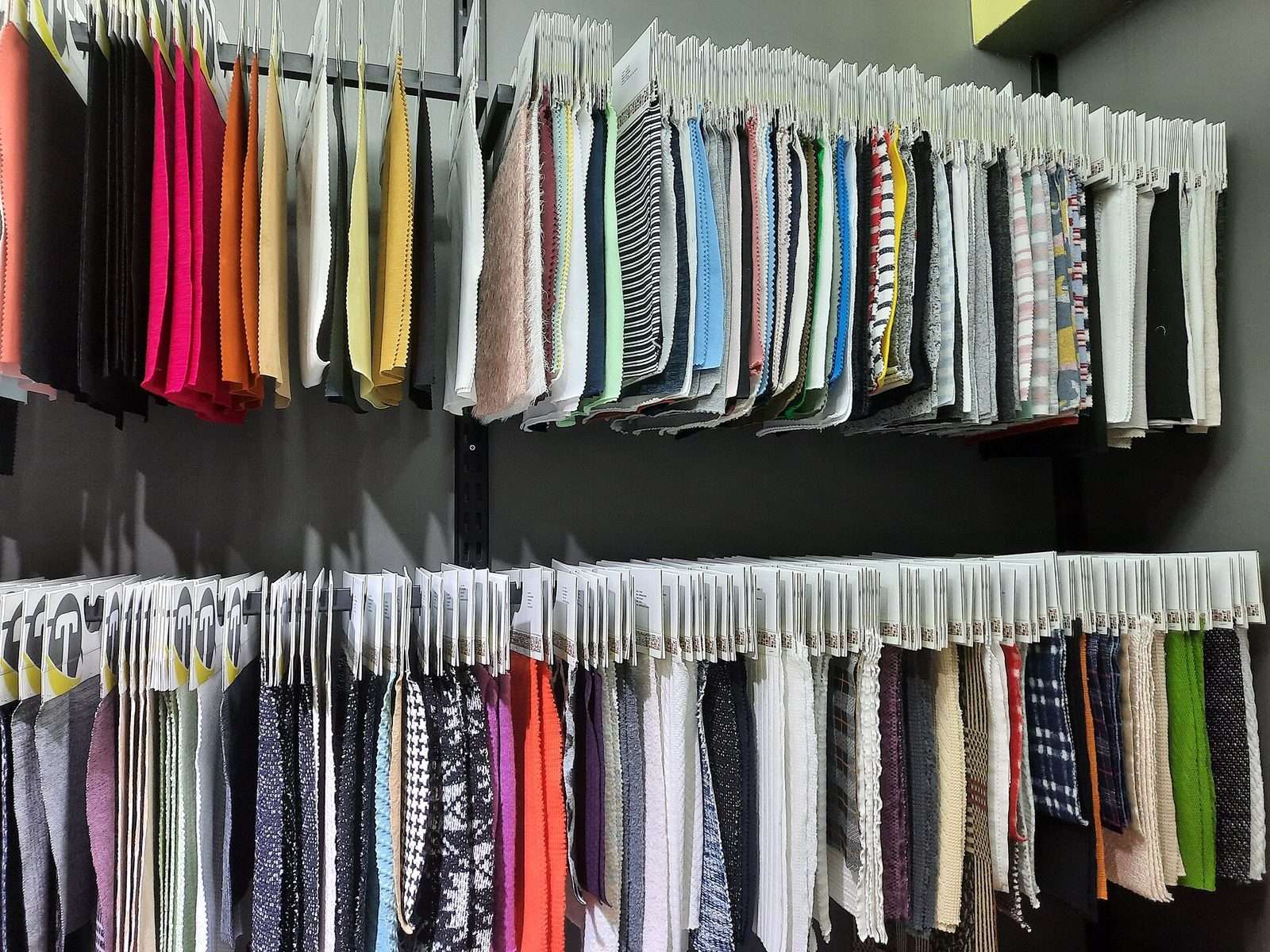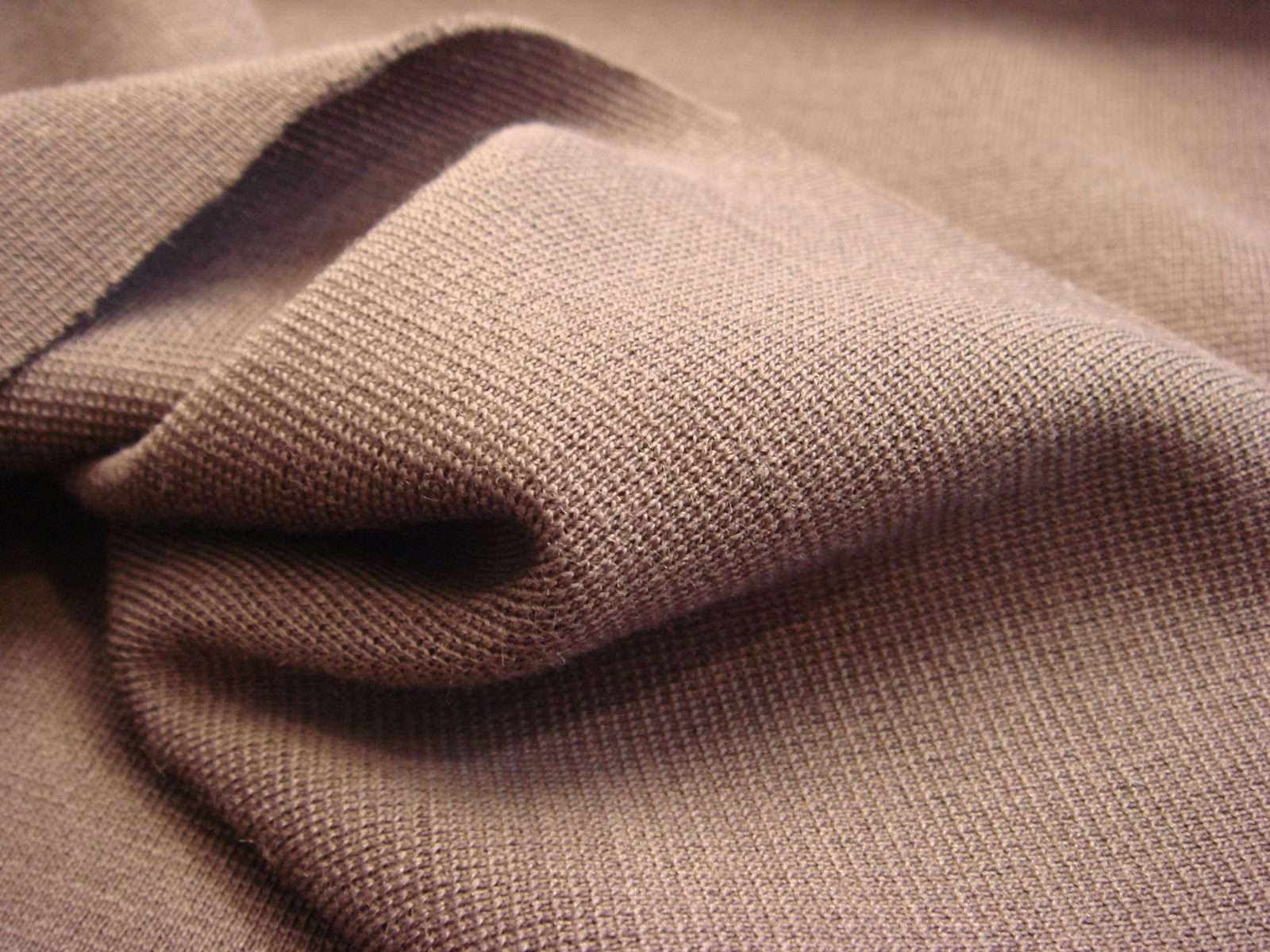
Knitted fabric is built by linking yarn into small loops called stitches. In a woven fabric, warp and weft yarns cross each other at right angles; in knitting, a single yarn system curls back on itself and those loop chains form the surface. This apparently small difference defines the whole character of the cloth: because loops can change shape under load, knitted fabric stretches, follows the body, resists creasing better than most wovens, and tends to curl at a raw cut edge.
Most of the garments we wear every day are knitted: t-shirts, sweatshirts, underwear, socks and sportswear. Comfort is only part of the reason; knitting also works with shorter preparation times and more flexible batch sizes than weaving.
How a knitted fabric is formed
A stitch is a small loop of yarn. Loops placed side by side form a course; loops stacked on top of each other form a wale. Stitch density drives weight, hand feel and dimensional stability: with the very same yarn, a tight setting gives a heavier, fuller and less elastic fabric, while a loose setting gives a lighter and more fluid one.
Most apparel knits are produced on circular knitting machines, where loops are formed around a cylinder and the fabric leaves as a tube. Machine diameter and gauge decide which fabric can be knitted on which line.
Knits split into two families. In weft knitting the yarn runs horizontally and forms loops course by course; single jersey, rib, interlock and piqué all belong here. In warp knitting many yarns work in parallel in the vertical direction, producing tulle, mesh and several technical textiles.
Common knitted constructions
- Single jersey: the basic single-bed structure, flat on the face and looped on the back; the main t-shirt fabric.
- Rib: vertical channels with high crosswise stretch, used for collars, cuffs and waistbands.
- Interlock: a double-bed structure that looks flat on both sides, fuller and more stable; typical for underwear and babywear.
- Piqué: a textured, slightly perforated surface used for polo shirts and breathable garments.
- Two- and three-thread fleece: heavier structures that can be brushed on the back for sweatshirts and joggers.
Where knitted fabric is used
Apparel is the best known field: t-shirts, sweatshirts, underwear, socks, babywear, sports and outdoor products. Knitted structures also appear in home textiles, automotive interiors and medical textiles. Expectations change with the application: a t-shirt is judged on hand feel and shape retention, sportswear on moisture management and recovery.
Weight, width and composition belong together
Three figures describe a knit properly: weight in grams per square metre, usable width and yarn composition. T-shirt single jersey usually sits between 140 and 200 g/m², while sweatshirt structures rise to 250-350 g/m². Width drives the marker plan and therefore the metres you need, and the cotton, viscose, polyester and elastane ratios change hand feel, dyeing behaviour and recovery.
What to check when choosing
The right fabric is not the "best" one but the one that fits your product. End use, washing expectations, printing or embroidery, seam type and target cost should be assessed together. Measuring weight, width and shrinkage at the sample stage is the most effective way to avoid surprises in bulk, because two fabrics carrying the same name can behave very differently.
To see the three core structures side by side, read single jersey, interlock and rib compared; for the measurement decision see choosing weight and width.
Tutku Fabric does more than describe knitted fabric: we help you choose the construction that matches your collection. As a sourcing and marketing partner we run the swatch and sample work, follow weight and width checks during production and manage pre-shipment quality control from a single point of contact. Tell us what you are looking for through the quote form and we will review the suitable alternatives and sample options together.
Next step
Shall we develop the right fabric for your product?
Share your target weight, width and end use; we will get back with suitable constructions and sample options.
Request sample / quote ↗